ReAct #
论文 #
-
论文地址
ReAct: Synergizing Reasoning and Acting in Language Models -
开源地址
ReAct git -
Project page
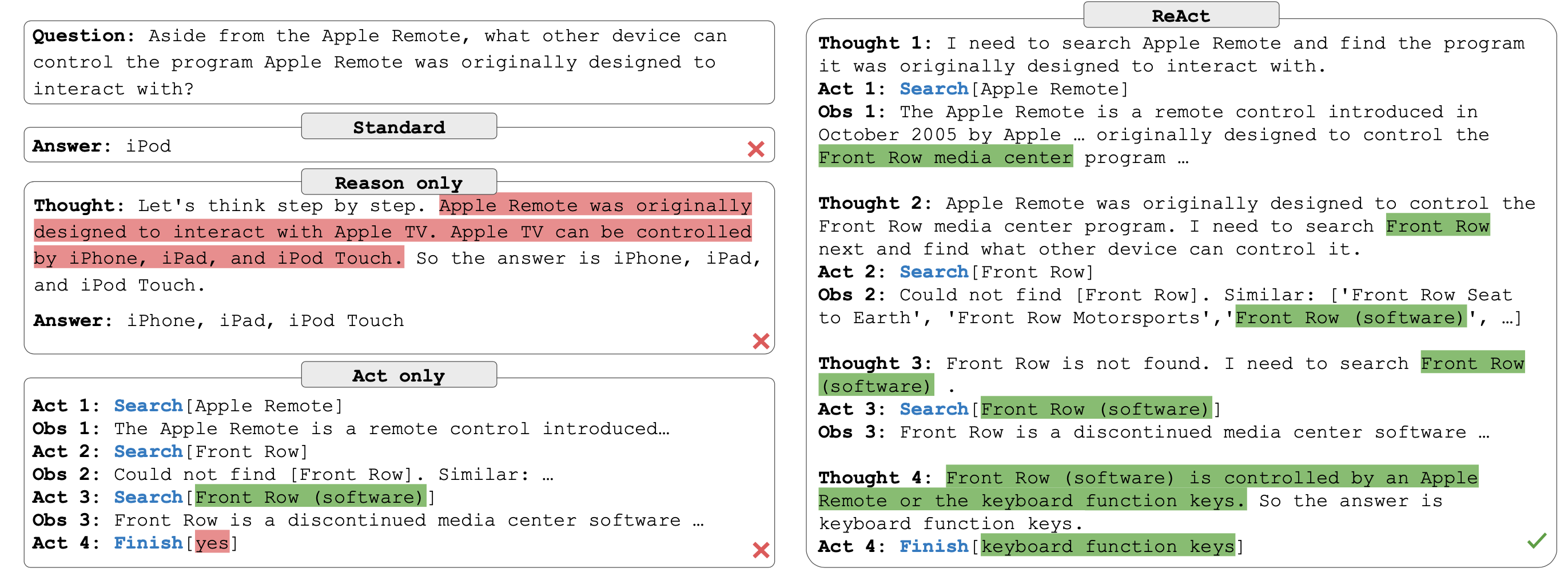
ReAct: Synergizing Reasoning and Acting in Language Models
实现[1] #
import json
import sys

folder = './prompts/'
prompt_file = 'prompts_naive.json'
with open(folder + prompt_file, 'r') as f:
    prompt_dict = json.load(f)

webthink_examples = prompt_dict['webthink_simple6']
instruction = """Solve a question answering task with interleaving Thought, Action, Observation steps. Thought can reason about the current situation, and Action can be three types:
(1) Search[entity], which searches the exact entity on Wikipedia and returns the first paragraph if it exists. If not, it will return some similar entities to search.
(2) Lookup[keyword], which returns the next sentence containing keyword in the current passage.
(3) Finish[answer], which returns the answer and finishes the task.
Here are some examples.
"""
webthink_prompt = instruction + webthink_examples
Reflexion #
论文 #
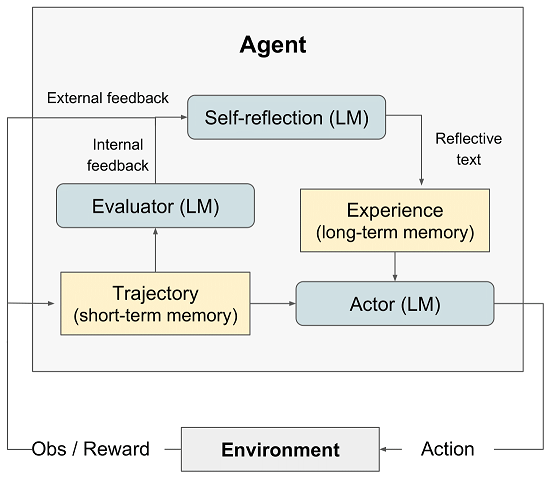
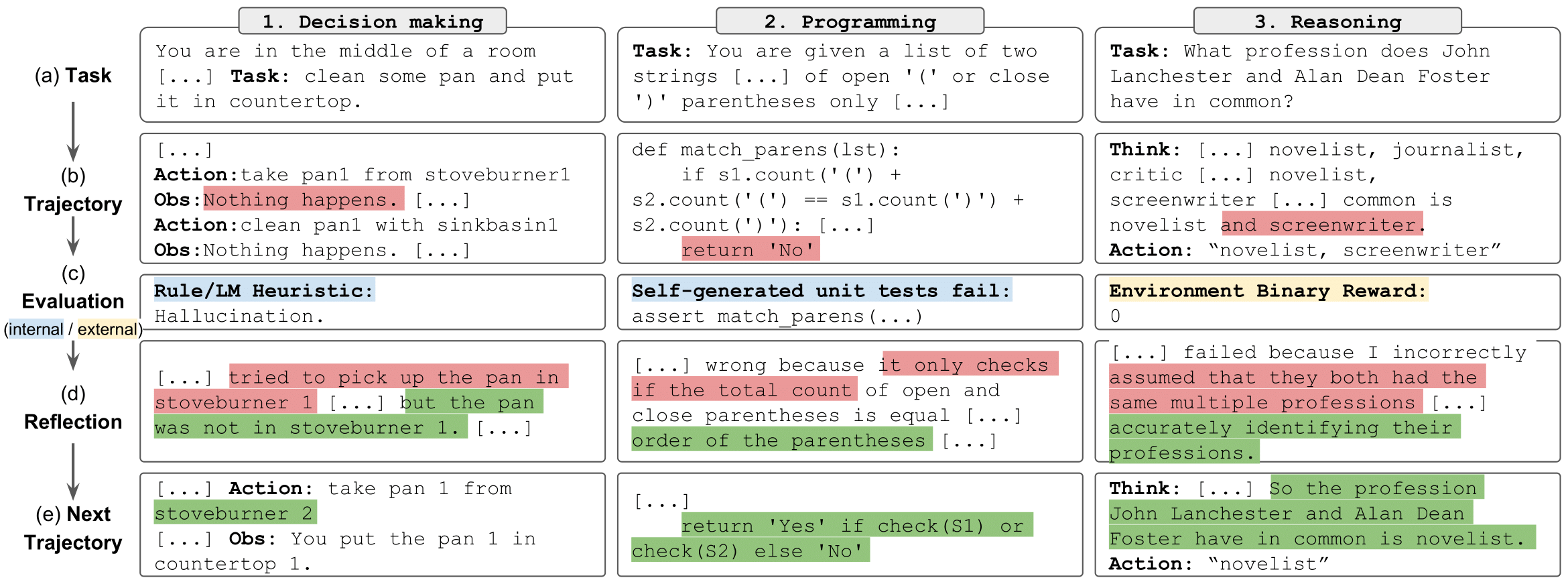
如图所示,Reflexion框架包含四个组成部分:
- Actor: Actor由LLM担任,主要工作是基于当前环境生成下一步的动作。
- Evaluator: Evlauator主要工作是衡量Actor生成结果的质量。就像强化学习中的Reward函数对Actor的执行结果进行打分。
- Self-reflexion:Self-reflexion一般由LLM担任,是Reflexion框架中最重要的部分。它能结合离散的reward信号(如success/fail)、trajectory等生成具体且详细语言反馈信号,这种反馈信号会储存在Memory中,启发下一次实验的Actor执行动作。相比reward分数,这种语言反馈信号储存更丰富的信息,例如在代码生成任务中,Reward只会告诉你任务是失败还是成功,但是Self-reflexion会告诉你哪一步错了,错误的原因是什么等。
- Memory:分为短期记忆(short-term)和长期记忆(long-term)。在一次实验中的上下文称为短期记忆,多次试验中Self-reflexion的结果称为长期记忆。类比人类思考过程,在推理阶段Actor会不仅会利用短期记忆,还会结合长期记忆中存储的重要细节,这是Reflexion框架能取得效果的关键。
实现[10] #
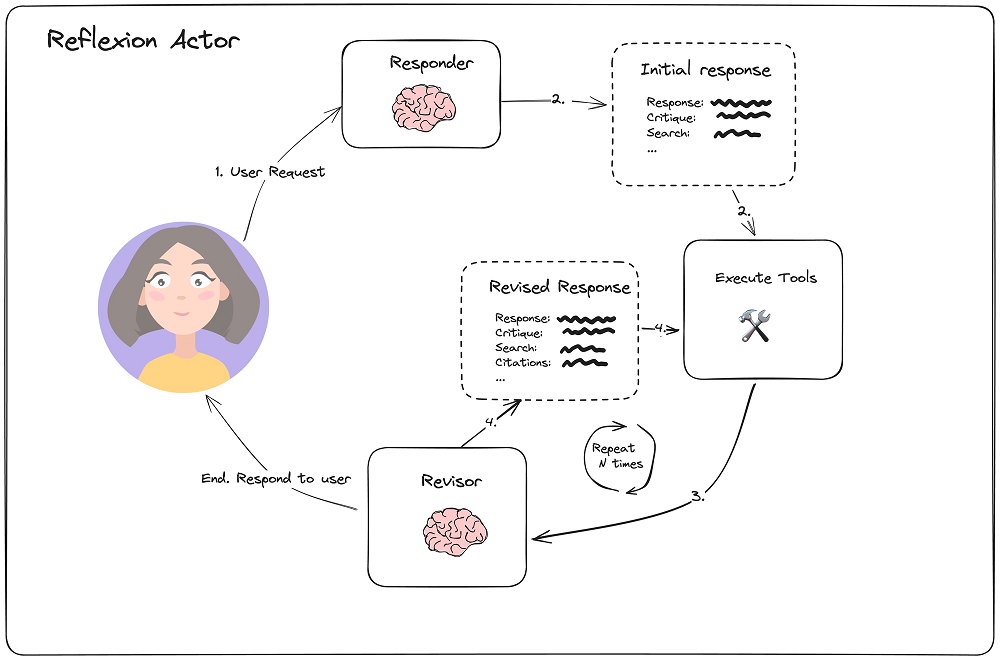
- Initial responder
import datetime

actor_prompt_template = ChatPromptTemplate.from_messages(
    [
        (
            "system",
            """You are expert researcher.
Current time: {time}

1. {first_instruction}
2. Reflect and critique your answer. Be severe to maximize improvement.
3. Recommend search queries to research information and improve your answer.""",
        ),
        MessagesPlaceholder(variable_name="messages"),
        (
            "user",
            "\n\n<system>Reflect on the user's original question and the"
            " actions taken thus far. Respond using the {function_name} function.</reminder>",
        ),
    ]
).partial(
    time=lambda: datetime.datetime.now().isoformat(),
)
initial_answer_chain = actor_prompt_template.partial(
    first_instruction="Provide a detailed ~250 word answer.",
    function_name=AnswerQuestion.__name__,
) | llm.bind_tools(tools=[AnswerQuestion])
validator = PydanticToolsParser(tools=[AnswerQuestion])

first_responder = ResponderWithRetries(
    runnable=initial_answer_chain, validator=validator
)
- Revision
revise_instructions = """Revise your previous answer using the new information.
    - You should use the previous critique to add important information to your answer.
        - You MUST include numerical citations in your revised answer to ensure it can be verified.
        - Add a "References" section to the bottom of your answer (which does not count towards the word limit). In form of:
            - [1] https://example.com
            - [2] https://example.com
    - You should use the previous critique to remove superfluous information from your answer and make SURE it is not more than 250 words.
"""


# Extend the initial answer schema to include references.
# Forcing citation in the model encourages grounded responses
class ReviseAnswer(AnswerQuestion):
    """Revise your original answer to your question. Provide an answer, reflection,

    cite your reflection with references, and finally
    add search queries to improve the answer."""

    references: list[str] = Field(
        description="Citations motivating your updated answer."
    )


revision_chain = actor_prompt_template.partial(
    first_instruction=revise_instructions,
    function_name=ReviseAnswer.__name__,
) | llm.bind_tools(tools=[ReviseAnswer])
revision_validator = PydanticToolsParser(tools=[ReviseAnswer])

revisor = ResponderWithRetries(runnable=revision_chain, validator=revision_validator)
总结 #
【ReAct 和 Reflexion 实现主要靠 prompt 工程】
参考 #
ReAct #
Reflexion #
1xx. Reflection Agents
LangGraph:Reflection Agents 实战 V
xxx #
Agent四大范式 | CRITIC:吴恩达力推Agent设计范式
Practice #
Translation Agent: Agentic translation using reflection workflow